
 By
By 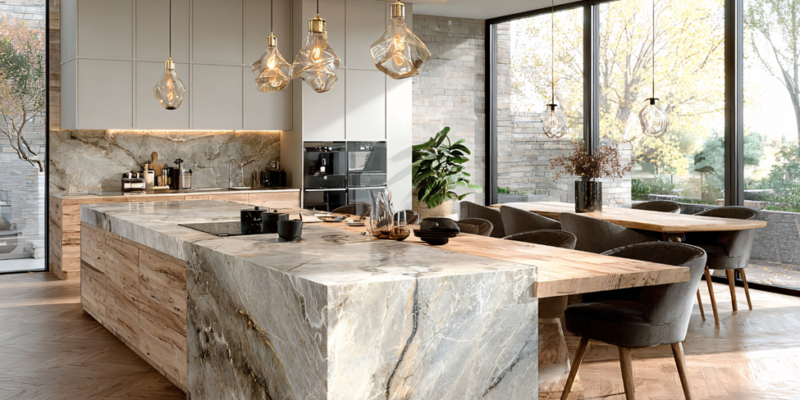
A waterfall island is one of those kitchen features that instantly signals “designer remodel.” Instead of stopping at the countertop edge, the same slab continues down the side of the island to the floor—like a continuous sheet of stone. It’s sleek, modern, and undeniably photogenic. But is it actually worth the added cost and complexity, or is it just a trend that looks great on Instagram?
Here are nine real-world pros and cons to help you decide whether a waterfall island belongs in your kitchen remodel—especially if you’re weighing budget, durability, and long-term resale appeal.
1) Pro: It looks high-end (and buyers notice)
If you want a single upgrade that makes a kitchen feel custom, a waterfall island does the job. The vertical slab creates a sculptural focal point, and it makes even a simple kitchen palette feel intentional. In listings, it photographs beautifully and often stands out against standard square-edge islands.
2) Con: It costs more—sometimes a lot more
A waterfall design requires additional material (often another full slab depending on size and veining), plus more fabrication labor. Edges need to be finished carefully, and seams may need special planning so the veining lines up. If you’re working with a tight budget, the waterfall may crowd out other upgrades that deliver more day-to-day value (like better storage or lighting).
3) Pro: It protects the island cabinetry
The biggest practical benefit is protection. In busy kitchens, island corners and panels take a beating: shoes scuff them, chairs bump them, kids kick them, vacuums scrape them. A waterfall side acts like armor—especially if you choose a durable material like quartz or porcelain. If your island sits in a high-traffic path, this protection can be genuinely useful.
4) Con: It can feel too “modern” for some homes
In ultra-traditional kitchens or older homes with lots of detail, a waterfall island can sometimes look like it landed from another planet. That doesn’t mean it can’t work—but it usually needs supporting choices to bridge styles (warmer metals, classic cabinetry profiles, softer lighting, or a more natural stone).
If you’re remodeling for resale, remember: the more stylistic the kitchen, the smaller the buyer pool may be.
5) Pro: It creates a clean, continuous design line
Waterfall islands make a kitchen feel visually calmer. The continuity from top to side reduces “breaks” in the design, which can make the whole space look more cohesive—especially in open floor plans where the island is seen from living and dining areas.
If you’re exploring kitchen countertop island designs, a waterfall edge is one of the most impactful ways to create that seamless, furniture-like centerpiece.
6) Con: Seams and veining alignment can be tricky
This is where expectations matter. Most waterfall edges require seams—often where the vertical piece meets the horizontal countertop. With materials like marble-look quartz or dramatic natural stone, aligning veining can be difficult and may require extra slab selection, careful layout, and higher fabrication costs.
If you’re sensitive to visible seams or want perfect book-matching, plan for additional time and budget.
7) Pro: It can elevate even simple materials
One reason waterfall islands are popular is that they make materials look more expensive than they are. A straightforward white quartz can feel “custom” when it wraps the island. A mid-range stone can suddenly look premium because it’s displayed like architectural cladding, not just a work surface.
In other words: the design move can increase perceived value without necessarily choosing the priciest material on the market.
8) Con: It reduces flexibility for seating and add-ons
A traditional island with a standard overhang can be more forgiving if you want to tuck stools in, adjust seating positions, or add side panels later. Waterfall sides can sometimes limit where stools can sit comfortably—especially if the side slab encroaches on knee space or if you prefer seating around the end of the island.
If entertaining is a big goal, make sure the island is designed with real-world ergonomics in mind: adequate overhang depth, enough clearance, and proper stool spacing.
9) Pro (with a caution): It’s durable when done right
A waterfall island can be very durable—if you choose the right material and edge profile. Quartz and porcelain tend to handle everyday life well. Some natural stones can be more prone to etching, staining, or chipping—especially on exposed corners.
The caution: corners are vulnerable. Consider a slightly eased edge or subtle radius rather than a razor-sharp corner, particularly if you have kids, pets, or a narrow walkway around the island.
So…is a waterfall island worth it?
A waterfall island is worth it when:
- Your island is a major visual focal point in an open layout
- You want a strong “designer” look that boosts perceived value
- You have enough budget to do it without sacrificing core function (layout, storage, lighting)
- You choose materials and fabrication that match your durability needs
It may not be worth it when:
- You’re stretching the budget and need to prioritize functional upgrades
- Your home’s style strongly leans traditional and the waterfall would clash
- You’re very sensitive to seams or veining alignment challenges
- You need maximum seating flexibility from your island footprint
A helpful rule: if your kitchen needs better flow, more storage, or improved lighting, fix those first. If those boxes are checked, a waterfall island can be the finishing move that makes the remodel feel truly elevated—without changing the footprint.









Comments