
 By
By 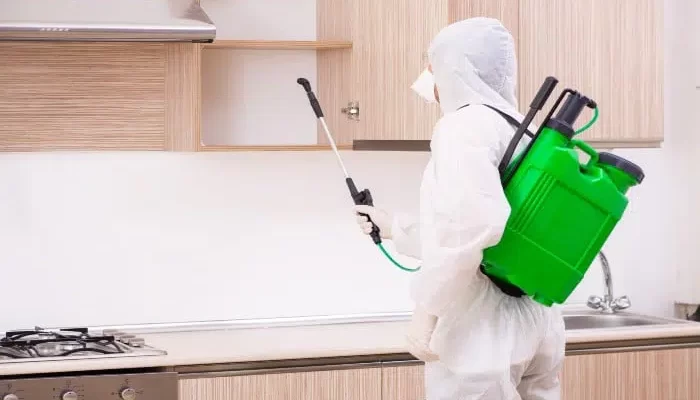
You’ve decided to start professional pest control. That’s the easy part. The harder question is how often you actually need it. Monthly? Bimonthly? Quarterly? The answer depends on where you live in Riverside County, what pests you’re dealing with, and how much tolerance you have for seeing the occasional bug between visits. Main Sail Pest Control offers all three frequencies across their Lake Elsinore pest control service area, and they’ll tell you honestly that the right schedule varies by property. A home in a newer Menifee subdivision surrounded by dry scrubland has different needs than a Lake Elsinore property near the water with mature landscaping and fruit trees. Here’s how to figure out what makes sense for your situation.
What a Pest Control Treatment Actually Does
Before comparing frequencies, it helps to understand what happens during a treatment visit. A standard general pest control service involves applying a residual product around the exterior perimeter of your home, focusing on the foundation line, entry points, eaves, window frames, and any areas where pest activity has been observed. The technician also treats the garage, addresses cobwebs, and inspects for new activity or conditions that could invite pests.
The residual product creates a chemical barrier that kills pests on contact as they attempt to enter the home. That barrier doesn’t last forever. Depending on the product, sun exposure, irrigation, and weather, the residual effectiveness degrades over time. In southwest Riverside County’s climate, where UV exposure is intense and summer temperatures regularly exceed 100 degrees, product breakdown happens faster than it would in a cooler, shadier environment.
This degradation rate is the core factor driving treatment frequency. The question isn’t how often you want to be sprayed. It’s how long the barrier remains effective enough to keep pests from reestablishing access to your home.
Quarterly Service: Who It Works For
Quarterly treatment means four visits per year, roughly every 90 days. For homes in southwest Riverside County, this typically translates to visits in early spring, early summer, late summer or early fall, and late fall or early winter.
Quarterly works well for properties with lower pest pressure. That usually means newer construction with tight building envelopes, minimal landscaping, no fruit trees, no proximity to open fields or water, and no history of persistent pest issues. A home in a newer Menifee tract development, set back from undeveloped land, with rock or desert landscaping and no significant vegetation touching the structure, is a reasonable candidate for quarterly service.
The trade-off with quarterly is the gap between treatments. Ninety days is a long time in Riverside County’s warm climate. The perimeter barrier weakens significantly in the final three to four weeks before the next visit, especially during summer when UV degradation accelerates. If your property has even moderate pest pressure, you may notice increased activity in that window. Main Sail includes free retreatments between scheduled visits if bugs reappear, which mitigates this gap, but the reality is that quarterly service provides the least consistent protection across the year.
Monthly Service: Who It Works For
Monthly treatment means twelve visits per year, with the barrier refreshed every 30 days. The product never has time to fully degrade before it’s reapplied, which maintains the most consistent protection.
Monthly service makes sense for properties with high pest pressure. Homes near Lake Elsinore’s water, properties adjacent to open land or agricultural fields, older homes with more entry points, houses with mature landscaping, citrus or avocado trees, and properties with a history of recurring ant, spider, or rodent issues all benefit from the tighter service interval.
It’s also the right frequency for homeowners who simply don’t want to see bugs, period. Some people are comfortable seeing an occasional spider or ant between visits. Others aren’t. If your expectation is a consistently pest-free home with minimal breakthrough activity, monthly service delivers that more reliably than any other frequency.
The cost difference between monthly and quarterly is real but often smaller than people assume. Spreading the service across twelve visits rather than four means each individual visit costs less, and the annual total typically runs about 40 to 60 percent more than quarterly rather than three times as much. For homes with high pest pressure, the reduced need for retreatment calls between visits can offset a meaningful portion of the difference.
Bimonthly: The Middle Ground
Bimonthly service, every other month or six visits per year, splits the difference between quarterly and monthly. The barrier is refreshed every 60 days, which keeps protection tighter than quarterly without the cost of monthly.
For many homes in Temecula, Wildomar, Canyon Lake, and the parts of Lake Elsinore farther from the water, bimonthly hits a practical sweet spot. The barrier stays effective through most of each interval during the milder months, and the summer visits are spaced closely enough to keep up with peak pest season. During the two hottest months, where UV and heat degrade product fastest, the 60-day gap can thin out, but the retreatment guarantee provides a safety net.
Bimonthly is Main Sail’s most popular frequency across their service area, and it tends to be the best value for properties with moderate pest pressure that don’t need monthly intensity but find quarterly too loose.
Location Matters More Than Most People Realize
The right frequency for your home isn’t just about your budget or your comfort level. Geography plays a bigger role than either.
A home in the interior of a well-established Temecula neighborhood, surrounded by other homes with maintained yards, might do fine on quarterly service. That same house transplanted to Lakeshore Drive in Lake Elsinore, half a mile from the water with a riparian corridor behind the back fence, would need monthly treatment to achieve the same results.
Elevation matters too. Homes on the hillsides above Lake Elsinore or in the higher-elevation areas of Wildomar tend to see less ant pressure but more spider and occasional rodent activity. Properties in the lower flatlands near the lake or in the agricultural transition zones around Menifee deal with a wider range of pests at higher volumes.
When Main Sail does an initial inspection, the technician evaluates the property’s specific risk factors: proximity to water or open land, landscaping density, construction age and condition, visible pest activity, and any existing entry points. The frequency recommendation comes from that assessment rather than a one-size-fits-all default.
What Happens If You Pick the Wrong Frequency
Choosing a frequency that’s too loose for your property’s pest pressure isn’t dangerous, but it is frustrating. You’ll notice more breakthrough activity between visits, you’ll call for more retreatments, and the overall experience will feel like pest control isn’t working even though the product itself is effective. The issue isn’t the treatment. It’s the interval.
Going with a higher frequency than you need costs more without a proportional benefit. If your property genuinely has low pest pressure and you’re on monthly service, you’re paying for protection you may not need nine months out of the year. Starting with bimonthly and adjusting up or down based on what you actually experience over the first few months is a reasonable approach if you’re unsure.








Comments