
 By
By 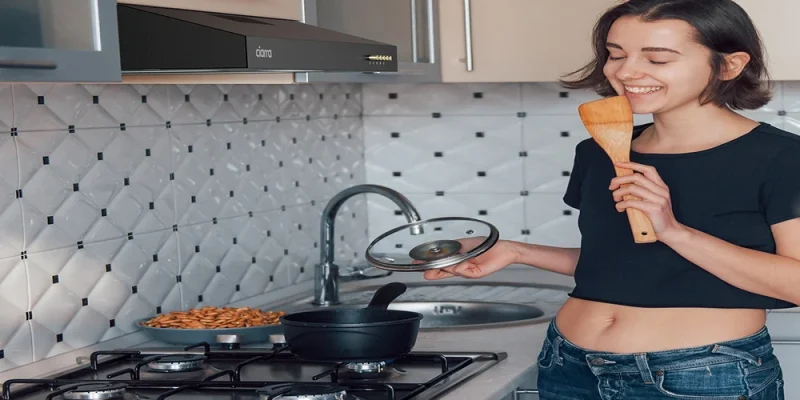
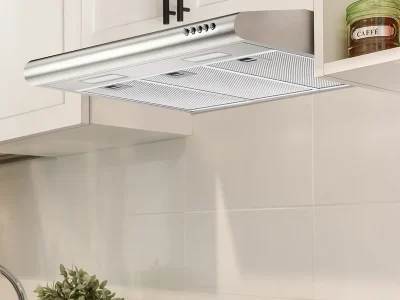
The recirculating cooker hood solves one of kitchen ventilation’s most persistent challenges: how to extract cooking odours and grease effectively when running a duct to the outside is impractical or impossible. In apartments, listed buildings, and kitchens positioned away from exterior walls, the recirculating approach is often the only viable option – and understanding how to get the most from it starts with understanding what the carbon filter actually does.
How Carbon Filtration Works
A recirculating cooker hood with carbon filter operates in two stages. The first is mechanical: a mesh grease filter captures airborne fat particles before they can enter the fan motor or recirculate into the kitchen. The second is chemical: activated carbon absorbs the volatile organic compounds responsible for cooking odours. Activated carbon is porous at a molecular level – its surface area is enormous relative to its physical size – which allows it to trap odour molecules effectively as air passes through.
Filter Replacement: The Critical Variable
The most important maintenance task for any recirculating system is carbon filter replacement on schedule. Activated carbon has a finite absorption capacity. Once saturated, it loses effectiveness and can even re-release previously captured odours when heated. The manufacturer’s recommended replacement interval – typically every three to six months depending on cooking frequency – exists for a reason. Following it consistently is the single most impactful action an owner can take to maintain system performance. Brands like Ciarra One provide clear replacement guidance and offer filter programmes that simplify the ongoing maintenance process.
Grease Filter Maintenance
The aluminium mesh grease filter requires regular cleaning – monthly is the typical recommendation – to prevent clogging that restricts airflow and reduces extraction effectiveness. Most grease filters are dishwasher-safe, making cleaning straightforward when incorporated into a regular routine. A clean grease filter also protects the carbon filter from premature loading, extending its useful life between replacements.
Choosing the Right Carbon Filter
Not all carbon filters are equivalent. Higher-grade activated carbon with greater surface area and carbon density absorbs more per unit and maintains effectiveness longer. When replacing filters, using manufacturer-specified replacements rather than generic alternatives ensures the correct carbon specification and fit for your specific hood model. The cost difference between quality and budget filters is modest; the performance difference in a recirculating system is significant.
When Recirculating Hoods Perform Best
For everyday domestic cooking – sautéing, boiling, baking, light frying – a well-maintained recirculating system with quality carbon filtration performs effectively and maintains kitchen air quality at a comfortable level. For high-intensity cooking – deep frying, wok cooking, extended grilling – the system works harder and filter replacement intervals should be shortened accordingly. Supplementary ventilation through an open window during particularly intensive cooking sessions provides additional support during peak demand periods.




Comments