
 By
By 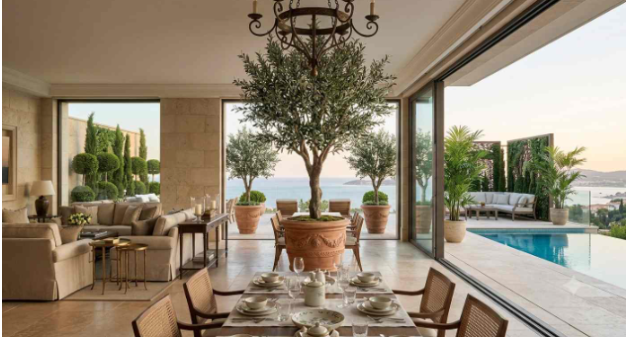
The modern coastal aesthetic has evolved far beyond the nautical kitsch of the past. Today’s seaside interiors are defined by crisp white walls, light-washed white oak floors, natural woven textiles, and plenty of negative space. To ground these bright, airy rooms and prevent them from feeling clinical, designers look for organic warmth.
While tropical palms were once the standard choice, elite decorators are now choosing a more sophisticated anchor: the tailored faux olive tree.
The Perfect Muted Color Palette
Live tropical plants often feature vibrant, high-gloss emerald leaves that can clash with the serene, understated palette of a modern coastal home. The olive tree offers an entirely different aesthetic. Its slender leaves boast a dusty, silvery-green hue with muted undertones that beautifully complement coastal textures like driftwood, raw linen, chunky jute, and matte travertine.
The delicate, airy branch structure allows natural sunlight to filter through the canopy, maintaining that light and bright beachside atmosphere without creating heavy, dark shadows in the corner of the room.
Tailored to Overcome Coastal Architecture Challenges
Modern coastal architecture frequently features grand vertical volumes, including double-height shiplap ceilings, soaring window walls, and open-concept great rooms. Off-the-shelf retail faux trees look completely out of scale in these spaces, while live indoor trees quickly drop their leaves due to the harsh UV exposure from panoramic windows and the dry air from continuous air conditioning.
By sourcing from luxury trade-only artisans like Jardin Du Monde, design pros can customize a tree to the room’s exact architectural proportions. Master craftsmen manually graft lifelike, real-touch polymer foliage onto sustainably harvested, chemically preserved natural hardwood trunks. This custom fabrication allows you to specify the exact height, trunk bend, and canopy spread needed to frame a waterfront view perfectly.
Completing the Seaside Illusion
To seamlessly integrate a tailored olive tree into a coastal home, focus on high-end potting. Trade the standard nursery pot for an oversized, artisan vessel-such as a weathered terracotta urn, a chalky white concrete planter, or a hand-thrown ceramic bowl.
Top-dress the base with authentic local elements like smooth white river stones, natural wood mulch, or preserved sheet moss to create a permanent, turnkey biophilic statement that stays flawlessly photo-ready for years.
This post was written by a professional at Jardin Du Monde. Jardin Du Monde is a global curator of eternal, luxury botanical art created for spaces with history, soul, and intention. Each handcrafted piece combines nature-inspired detail, refined materials, and functional aesthetics to create timeless botanical designs that elevate both residential and commercial interiors. Our compositions are intentionally restrained, bringing organic beauty and sophistication to layered spaces while complementing natural elements such as stone, wood, linen, and leather. Guided by a belief in permanence, we create statement pieces that deepen in character over time rather than follow fleeting trends. Inspired by global botanical encounters and French-inspired refinement, our collections reflect artisanal realism, functional luxury, and enduring elegance. Located in St. Petersburg, FL, Jardin Du Monde proudly serves the surrounding areas, including clients seeking a fake olive tree in Sarasota FL, with luxury botanical art designed to become a lasting part of every space.






Comments